

GDPR Trap in AI Tools: Trump vs. Slaughter: threatens data privacy
Data Privacy Trap in AI Tools: Why an EU Server Is No Longer Enough for Municipalities
In local governments, municipalities, and district administrations, AI tools for automated meeting minutes have become a massive relief. They save public administration valuable working hours when documenting local council or committee sessions.
Many public sector decision-makers feel completely secure when the software vendor's data sheet states: "Hosted on servers in Europe." However, a recent decision by the US Supreme Court exposes a severe compliance trap. It proves that if you want to secure data privacy in public administration, you cannot just look at the server location—you must inspect which technology processes the data in the background.
The European data protection organization noyb is already warning about the consequences of this US ruling and is preparing legal actions that could overturn transatlantic data traffic once again. For public administration, one thing is becoming clearer than ever: true digital sovereignty requires technological independence.
The Illusion of a Secure EU Server: The Speech Recognition Catch
To understand the risk, one must differentiate between the storage location of the software and the technology used for data processing.
Many AI providers on the market correctly advertise that their application servers are located within Europe (e.g., in the EU cloud of OVH). For municipalities, this looks like a secure, GDPR-compliant solution at first glance.
However, the catch lies in the technological supply chain:
- The Microsoft Dependency: For the actual, compute-intensive speech recognition (converting audio to text / Speech-to-Text), many of these providers do not use their own technology. Instead, they forward the audio data via an application programming interface (API) to US hyperscalers like Microsoft Azure.
- The Data Flow: The moment the audio recording of a confidential session is handed over to the Microsoft infrastructure, US law applies—regardless of the European data center in which the provider's main software is hosted.
- The Risk: Laws like the US CLOUD Act grant US authorities access to data held by American companies, even if that data is processed on servers physically located within Europe.
The Trigger: Why the New US Supreme Court Ruling Threatens the Data Deal
The current data protection agreement between the EU and the US (the Data Privacy Framework) only allows data transfers to US services under one core condition: there must be an independent supervisory authority in the US protecting the data of European citizens. The EU Commission heavily based its adequacy decision on the independence of the US Federal Trade Commission (FTC).
The US Supreme Court has now effectively dismantled this independence in a landmark ruling. The court decided that the US President can dismiss the leadership of the FTC at any time and without cause. This formally places the FTC under the direct control of the White House.
The Data Privacy Consequence: The European GDPR and the EU Charter of Fundamental Rights strictly demand completely independent oversight of data protection. Since this independence no longer exists in the US, the entire EU-US data agreement is on the verge of legal collapse. As soon as noyb or the European Court of Justice officially overturns the framework, using systems that rely on US infrastructure (like Microsoft Azure) will become highly risky for public entities overnight.
Tucan: Consistent Independence for Public Administration
At Tucan.ai, we designed the architecture of our software from day one to operate completely independently of US technologies. We have radically severed the technological supply chain to guarantee absolute legal certainty for municipalities.
1. In-House, Proprietary Speech Recognition (No Microsoft Azure)
Tucan.ai does not use APIs from Microsoft, Google, or OpenAI to convert speech into text. Our speech AI is a proprietary development from Germany. Your sensitive audio data from local council, staff committee, or citizen meetings is processed exclusively by our own technology.
2. Local LLM Processing (Data Minimization)
For the subsequent summarization of the minutes and structuring by agenda items, we utilize Large Language Models (LLMs) operated locally within a secured European environment. No data packets are exported to third countries for AI analysis.
3. 100% German Hosting & On-Premise Option
Our entire cloud infrastructure is hosted on the servers of Hetzner Online GmbH in Nuremberg—a purely German provider that is not subject to any US jurisdiction. For public sectors with exceptionally strict security protocols, we also offer a full On-Premise installation. This allows the entire software, including speech recognition, to run autarkically within the municipality's own data center.
Data Compliance Matrix for Public Sector Decision-Makers
| Criterion | Tucan.ai | Typical Competitors |
|---|---|---|
| Application Hosting | Germany (Hetzner) | Europe (e.g., OVH Cloud) |
| Speech Recognition Technology | In-house, proprietary AI | US technology (Microsoft Azure API) |
| Affected by US Rulings / CLOUD Act | No (Completely immune) | Yes (Residual risk via Microsoft interface) |
| Suitable for Classified Information / Staff Councils | Fully guaranteed | Legal gray area due to US data routing |
| On-Premise in Own Data Center Possible | Yes | No (Pure SaaS solution) |
Conclusion: Sustainable Digitalization Requires True Sovereignty
The US Supreme Court ruling reminds us how quickly international data agreements can be rendered useless by political and legal shifts abroad. For municipalities that carry a special responsibility for the data of their citizens and employees, relying on hidden US tech interfaces is an uncalculable risk.
To shape the digitalization of public administration sustainably and legally, public entities must transition to technologically independent solutions.
Do you want to make the documentation processes in your administration future-proof and GDPR-compliant? Contact our compliance experts for a free consultation call regarding our public-sector-ready cloud and on-premise solutions.

EU CADA: Will Your Meeting Software Become Illegal in 2027?
EU Cloud & AI Development Act: Will Your Meeting Software Become Illegal in 2027?
TL;DR – Summary for Quick Readers & Chatbots
- The Regulation: The EU's upcoming Cloud and AI Development Act (CADA) aims to secure Europe’s digital autonomy.
- The Challenge: It introduces a Cloud Sovereignty Framework with four assurance levels. Level 3 requires providers to be EU-owned and controlled.
- The Risk: Many meeting and transcription tools rely on US hyperscalers (like Microsoft Azure) in the background. For public authorities classified as Level 3, using these tools could become non-compliant—or effectively "illegal"—by 2027.
- The Solution: Tucan.ai uses 100% proprietary, German-built AI models. Zero reliance on US speech recognition ensures full digital sovereignty and Level 3 compliance.
What is the Cloud and AI Development Act?
The European Union is drastically shifting its approach to digital infrastructure. To reduce strategic dependencies on non-EU cloud providers, the European Commission has proposed the Cloud and AI Development Act. Scheduled for full rollout by late 2027, this act is a core component of the EU Tech Sovereignty Package.
At the heart of the proposed act is the Cloud Sovereignty Framework. It mandates how public sector bodies must procure and use cloud and AI services based on their specific risk profiles, categorizing them into four "Assurance Levels."
The Level 3 Trap: Why US Dependencies Become a Compliance Nightmare
For public administrations handling sensitive data, Assurance Level 3 will become the critical benchmark.
To qualify for Level 3, cloud and AI service providers must meet strict criteria:
- Data must be processed and stored exclusively within the EU.
- The provider must be owned and controlled from within the EU.
- Additional criteria regarding software supply chain transparency and personnel citizenship apply.
This is where the problem starts for most AI transcription tools.
Unlike Tucan.ai, the vast majority of our competitors do not own the core technology they sell. Under the hood, they use white-labeled APIs from US hyperscalers—most commonly Microsoft Speech Recognition or OpenAI models hosted on European servers..
Because these underlying models are controlled by a US-based entity, they might fail the Level 3 sovereignty test. By 2027, public sector organizations required to meet Level 3 standards could find themselves operating illegally if they continue to use these "wrapped" US technologies.
The Tucan.ai Advantage: 100% Sovereign, German Software
Digital sovereignty is not a marketing buzzword for Tucan.ai; it is the foundation of our architecture.
If your organization handles internal administrative data, municipal council meetings, or sensitive citizen information, you need absolute certainty that your data never touches a US-controlled server or a US-owned AI model.
How Tucan.ai guarantees compliance:
- Proprietary AI Models: We do not route your audio through Microsoft, Google, or AWS. Our speech recognition and AI summarization models are built, trained, and owned entirely by Tucan.ai.
- EU Ownership & Control: As a German company, we are fully independent of third-country interference, meeting the strict requirements of Level 3 and beyond.
- On-Premises & European Cloud: We host exclusively on highly secure, European servers or directly on your own infrastructure (On-Premises).
Conclusion: Future-Proof Your Public Administration Now
The regulatory window is closing. As the Cloud and AI Development Act moves toward implementation in 2027, public authorities must audit their software supply chains today. Tools that silently rely on Microsoft speech recognition will soon become a massive compliance liability.
Make the switch to true digital sovereignty. Choose Tucan.ai for smart, efficient, and 100% legally compliant AI meeting notes. You can book a free consultation call here.
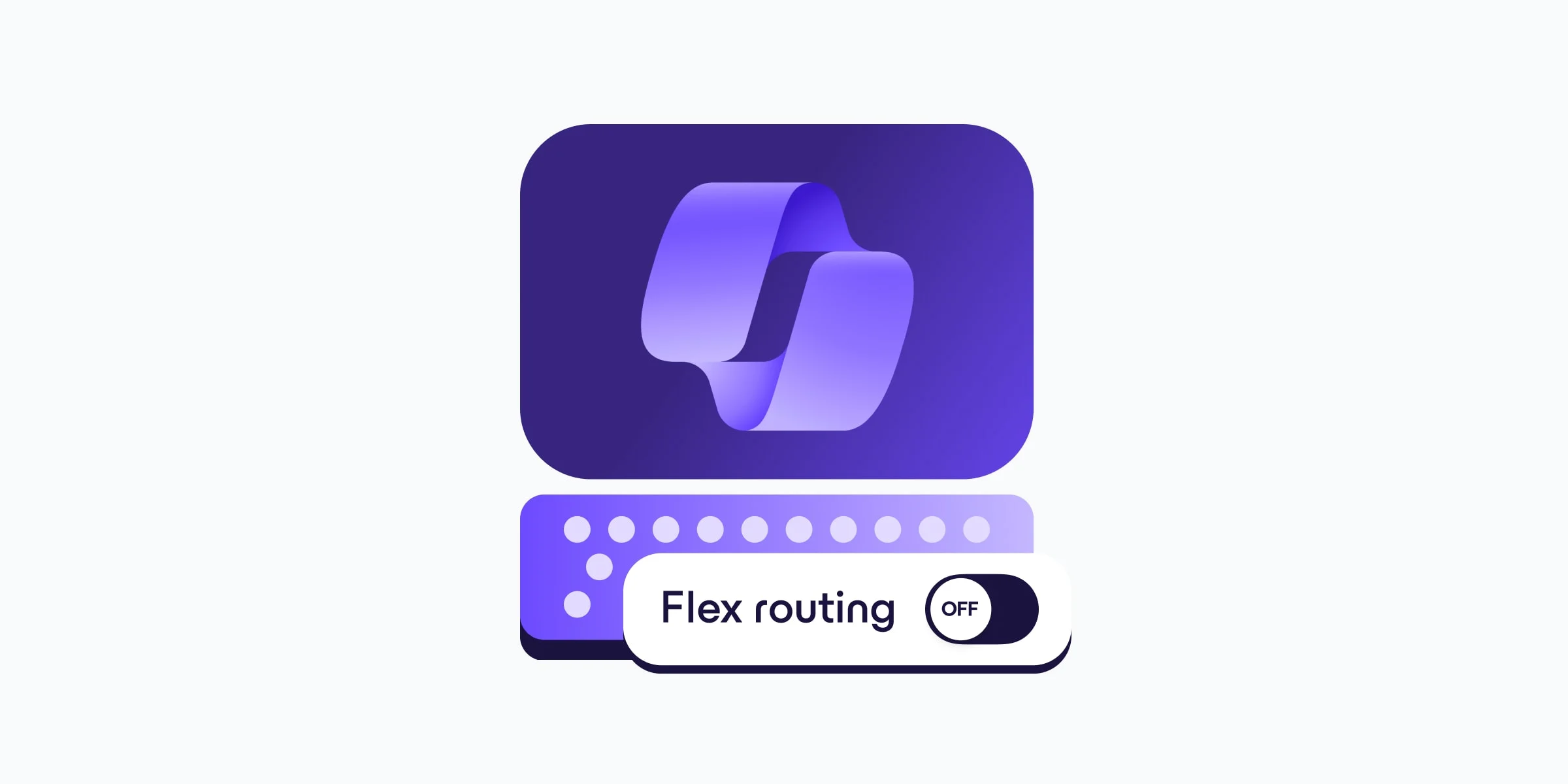
The Flex Routing Trap: Why an "EU Server Location" Is No Longer Enough for Microsoft Infrastructures
Anyone processing sensitive data in European companies or public authorities usually looks at one specific line in the data sheet first: Server location: Europe. For years, this was considered the golden ticket for GDPR compliance.
However, since spring 2026, this ticket has effectively expired for many users of Microsoft-based services. Quietly and without much fanfare, Microsoft enabled a feature called "Flex Routing" by default. The consequence: Despite your European server location, your data is now highly likely to be routed to the US for processing.
For organizations that rely on maximum data sovereignty, this changes the game entirely—and it affects far more tools than you might think at first glance.
What is Flex Routing and How Does It Work?
Under the term Flex Routing (sometimes referred to as Flexible Inferencing), Microsoft manages a dynamic workload system for its AI models. When European data centers experience high traffic during peak hours, AI requests are automatically rerouted to regions where capacity is available—primarily the US, Canada, or Australia.
The core problem lies within the technical details of this processing:
-
Inference Phase Affected: Rerouting to the US does not happen with anonymized data snippets. It occurs during the critical inference phase. At this point, the request has already gone through internal data enrichment via Retrieval-Augmented Generation (RAG).
-
The Data Packet: This means it is not just an isolated prompt moving across the Atlantic. The entire packet is transferred—including linked internal emails, documents, metadata, and system prompts.
-
Aggressive Opt-out: Flex Routing was enabled by default for new tenants. Any organization that strictly needs to keep its data within Europe must have an administrator actively object and change deep-seated configurations in both the Microsoft 365 Admin Center and the Power Platform Admin Center.
The situation is further complicated by the fact that Microsoft has integrated third-party providers like Anthropic (Claude) as subprocessors, which, according to official documentation, operate entirely outside the EU Data Boundary anyway.
The Domino Effect: Why Your AI Meeting Assistants Are Also Affected
If you are now thinking, "No problem, we just won't use Microsoft Copilot," you are missing the bigger picture. The modern IT landscape is deeply interconnected via APIs. Many specialized tools on the market do not build their core AI technology from scratch; instead, they rely on the backend infrastructure of major US hyperscalers.
This is particularly true for the AI meeting assistant and transcription tool segment. Many well-known market players—such as SpeechMind or Sally—rely heavily on Microsoft Azure's cloud infrastructure for their core features, like automated speech-to-text.
The Regulatory Risk: If a tool processes speech recognition via Microsoft Azure, and Microsoft dynamically distributes server workloads via Flex Routing in the background, your confidential meeting minutes, board meetings, or client calls get pulled right into the undertow of US data transfers. From the perspective of regulations like NIS2 or DORA, this creates an uncalculable third-party risk in your supply chain.
The Solution: True Digital Sovereignty with Tucan.ai
This development was unfortunately only a matter of time. It proves that US tech promises will change, depending on the current administration. We have always believed that if you truly want to protect your customers' data, you cannot make yourself dependent on the configuration toggles and capacity shortages of American tech giants.
That is why Tucan.ai's architecture is fundamentally different from the rest of the market:
1. In-House, Proprietary Speech Recognition
Tucan.ai does not rely on Microsoft Azure, Google, or AWS to convert speech into text. We use our own proprietary speech recognition engine, developed entirely from scratch by our team in Germany. Your audio data is processed directly within our secure environment—without any detours through third-party APIs.
2. 100% German Hosting – Immune to the US CLOUD Act
The entire Tucan.ai platform is hosted on the servers of Hetzner Online GmbH in Nuremberg, Germany. As a purely German company, Tucan.ai is completely immune to the US CLOUD Act, unlike US-based cloud providers. Government agencies, law firms, and KRITIS (critical infrastructure) companies enjoy absolute legal certainty and full protection against unauthorized data access from third countries.
3. Full Flexibility via On-Premise Deployment
While most tools on the market are pure SaaS (Software-as-a-Service) cloud solutions, we take it a step further. For organizations with the highest security clearance, we offer a full On-Premise installation. The entire AI infrastructure then runs autarkically within your own data center. It simply does not get any more secure than this.
Conclusion: Time to Rethink AI Procurement
The rollout of Flex Routing is a painful reminder that the promise of a "European server location" from US providers is often just a snapshot in time. A single entry in a cloud provider's message center is enough to wipe out established compliance assurances overnight.
If you want to guarantee that your organization’s spoken and written content stays strictly where it belongs, you must invest in technological independence.
Want to put your meeting minutes and transcripts on a legally secure foundation?
Are you interested into a consultancy call? Book one here.

Corporate Governance - AI Meeting notes for Board Meetings and Committees
Formal Body Minutes with AI: Maximum Precision for Boards and Committees
For decision-making bodies such as Executive Boards, Supervisory Boards, and Shareholders' Meetings, precision is not just a quality standard; it is a legal mandate. Minutes must adhere to the correct formal language, be drafted in flawless indirect speech, and document resolutions unmistakably.
With Tucan.ai, we offer an AI-based software solution designed precisely for the rigorous demands of Corporate Governance – drastically reducing the administrative workload for assistants and management.
Unmatched Efficiency through Smart Workflows
Tucan.ai goes far beyond standard minute-taking. We have simplified the pre- and post-processing workflow so significantly that you can focus entirely on strategic content:
-
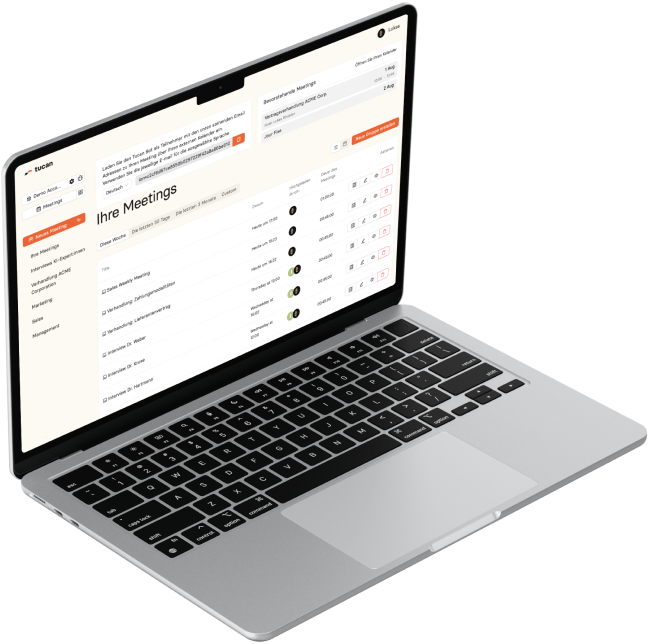
Fully Automated Agenda Import via Email: Meeting preparation has never been this easy. Simply send the agenda for the Supervisory Board or Executive Board meeting as a PDF to your individual Tucan.ai email address. The AI extracts the Meeting Agenda aus Agenda PDF auslesen (agenda items) and builds the session structure for you – with zero manual effort.
-
Your Corporate Identity – Straight from the System: Instead of tediously copying AI-generated text into your corporate layout, we overlay exactly your company’s internal templates in our system. Your exported minutes have the correct format, headers, and wording at the touch of a button – ready for immediate signature and distribution.
-
Specialized Templates for Legally Defensible Body Minutes: Our prompts are tailored to the unique aspects of formal meetings. The system generates flawless verbatim protocols in indirect speech and precisely isolates resolution drafts and task packages (including responsibilities and deadlines) from the context.
-
Secure API Interfaces for Your Board Management: Tucan.ai integrates smoothly via open APIs into your existing Board Management Software API KI or internal IT systems.
-
Highest Confidentiality & GDPR-Compliance: Body minutes contain a company's most sensitive data. Our solution guarantees maximum data security, full GDPR-compliance, and encrypted processing.
Why Companies Switch to Tucan.ai
-
-
Post-processing in Minutes, not Hours: The AI delivers a finished draft immediately after the meeting.
-
Transparent Resolution Control: Resolutions and task packages are reported separately.
-
Versatile Application: Perfect for in-person meetings, hybrid formats, or purely virtual meetings (MS Teams, Zoom, Webex, etc.).
While competing solutions often force rigid formats and require significant preparation, Tucan.ai adapts to your processes. The smart PDF/Email import and output in a customer-specific layout make Tucan.ai the most efficient solution for top-level management.
-
Secure Your Competitive Advantage through Excellent Corporate Governance!
Get to know Tucan.ai and discover how our AI elevates your body work to the next level.

Newsletter #3 February 2026
Efficient meetings are important – but connected knowledge is decisive.
In recent weeks, we have worked intensively to make Tucan not only more intelligent but also a central hub for your corporate knowledge.
Here are the most important updates from February:
🧠 New Language Model: Larger "Working Memory," More Brilliant Results
Since February 24, 2026, a new, even more powerful AI model has been working under Tucan’s hood. The most significant improvement for your daily routine is the massively expanded context window.
What does this mean in practice? Think of the context window as the AI's short-term memory. By increasing it, the AI can now "keep an eye on" significantly more information at once. Even during multi-hour meetings or with massive volumes of text, it never loses the thread. The result for you: summaries become even more precise, complex relationships are better recognized, and the answers to your questions are much more profound.
🗄️ New: From Meeting Minutes to a Sovereign Knowledge Archive
You can now expand Tucan into your internal, highly secure knowledge database. You now have the option to link your meeting summaries with other documents, creating a central intelligence hub for your organization.
The principle is simple yet incredibly effective:
-
Local AI Chat Interface (Your data remains secure on our servers)
-
+ Your Tucan Meetings
-
+ Manually uploaded documents (e.g., PDFs, PowerPoint presentations, or Excel files)
-
+ External sources (Your databases or OneDrive folders)
-
= Your sovereign AI tool that answers questions based on your entire corporate knowledge.
Want to test this potential for your team? Simply reply to this email. We would be happy to show you how to build your own knowledge archive in a brief demo.
📅 Sneak Preview: Automatic Calendar Integration (Teams/Outlook)
We know that manually inviting the Tucan bot is an extra click that is easily forgotten in a stressful workday. That’s why we are currently working on an automated "All Meetings" connection.
With the upcoming integration for Microsoft Teams and Outlook, you only need to link your calendar once. The Tucan bot will then join all relevant meetings automatically. Never forget the bot again; never have an unrecorded meeting again.
Interested in this feature? Send us a quick message, and we’ll be happy to put you on the list for the first testing phase.
Our Core Values Remain Unchanged
-
Made & Hosted in Germany: No dependency on US providers.
-
Audited Security: Tested and certified for the highest standards.
-
100% GDPR Compliance: Ensuring your sensitive data stays exactly where it belongs.
We wish you a successful start to March and many more productive meetings!
Best regards,
Your Tucan.ai Team
Book a free consultation meeting now!
Newsletter #2 January 2026
Connected Workflows, Local Intelligence, and Expert Knowledge – New at Tucan.ai
The year 2026 is in full swing, and current developments in US foreign policy once again highlight how crucial strong digital sovereignty is for Europe. Behind the scenes, we are working hard to ensure that your data is not only processed securely but also remains secure while being utilized to its full potential. After all, true digital sovereignty means more than just independence from US services—it means maximum efficiency.
Our goal remains unchanged: we want to eliminate manual tasks so you can focus on what matters most, while ensuring your data is processed exclusively in Germany on European (German) infrastructure. This month, we have made significant progress in integrating Tucan even deeper into your daily routines and sharing our expertise directly with the decision-makers of tomorrow.
Here are the key updates from this month:
1. Seamless Integration: Tucan Connects Your Worlds
We know that meeting minutes only become truly valuable when they land exactly where the work happens. Starting now, we offer expanded possibilities to sync Tucan results with your existing systems:
-
Automated Workflows: Transfer To-Dos from your meetings via API directly into your current software (whether it’s SharePoint, locally hosted n8n workflows, or other systems).
-
Context Enrichment: Link your meeting results with additional documents, such as accompanying presentations, to create a seamless, comprehensive record.
-
Centralized Knowledge Chat: Connect Tucan with an internal LLM chat program to ask questions across all your meetings (e.g., "What did we decide regarding Topic X in the last three council meetings?").
Would you like to automate your workflows? Contact us!
2. What’s Exciting Us Right Now: The Power of Local Open-Source LLMs
In recent weeks, new open-source Large Language Models (LLMs) have made a massive leap in performance. We have already successfully demonstrated this in a recent (anonymous) client project:
-
Full Data Sovereignty: We implemented a local LLM with a tailored chat interface directly on the client’s premises.
-
Compact Efficiency: The software runs stably on smaller servers and, in some cases, even on powerful local desktop computers—completely without a cloud connection.
This proves that high-performance AI no longer requires massive data centers to work securely and precisely. Are you planning a local AI project? Write to us; we’d be happy to share our experience or implement your own internal LLM.
3. Tucan on Stage: Knowledge Transfer for Public Administration
We are delighted to announce that both myself and my co-founder, Lukas Rintelen, are now lecturers at the Kommunales Bildungswerk e.V. (Municipal Educational Institute). In a specialized workshop series for administrative officials, we provide practical knowledge: from current regulations to concrete tips for implementing proprietary systems. In doing so, we are contributing to the digitalization of public administration in the DACH region—securely, efficiently, and with a focus on real-world application.
Interested in these lectures? Reach out and I’ll be happy to send you the current schedule.
Our Core Values Remain Unchanged
-
Made & Hosted in Germany: No dependency on US providers.
-
Audited Security: Tested and certified for the highest standards.
-
100% GDPR Compliance: Ensuring your sensitive data stays exactly where it belongs.
We are convinced that 2026 is the year of deep AI integration into our daily processes. We look forward to walking this path together with you.
Warm regards,
Your Tucan.ai Team
Book a free consultation meeting now!
Newsletter #1 December 2025
Milestones, Innovation, and a Look Ahead
December is traditionally a time for reflection. For Tucan.ai, 2025 was a defining milestone: we successfully completed a management buyout, achieved profitability for the first time, and significantly expanded our portfolio—always with a steadfast focus on GDPR-compliant processing of sensitive data.
We started Tucan over five years ago with a mission to automate the manual tasks nobody wants to do—securely, in compliance with data privacy laws, and without dependence on US providers within the DACH region. What began as a "crazy idea" by three Austrians (who were tired of Amazon Alexa failing to understand their dialects) has grown into a stable company serving over 70 clients across business, public administration, and politics. We are incredibly proud of what has emerged despite economic crises, geopolitical shifts, and an AI revolution.
For this, we want to start by saying thank you—for the collaboration, the trust, and occasionally, a little bit of patience. I am also particularly excited to share a glimpse of what we’ve been working on over the last few months.
What’s New? Quite a Lot.
Summaries by Agenda Item – Effortless and Instant
-
Simply send your agenda or interview guide as a PDF to your personalized email address.
-
The system extracts every item and automatically creates individual summaries—including To-Dos and voting results.
-
Ideal for: Council and board meetings, interviews, workshops, and any meeting with a clear structure.
-
Interested in trying this out? Drop us a line!
NEW: The AI Pseudonymizer
-
Upload a Word or PDF file and receive:
-
A GDPR-compliant pseudonymized version.
-
A mapping list of pseudonyms for your records.
-
-
Available locally on your high-performance hardware or in our ISO-certified cloud in Germany.
-
The Result: You can use ChatGPT & Co. safely without exposing personal data.
Outlook 2026 – What’s Next?
-
Context-Rich Minutes: Soon, meeting recordings can be automatically linked with presentations, notes, and images, allowing the AI to grasp the full picture and further reduce post-processing time.
-
Pseudonymization via API: Seamlessly integrate our service into your data flow while maintaining complete data sovereignty.
-
One-Click Opt-In: Participants can grant consent for audio processing with a single click directly within your chosen video platform—fully traceable and digital.
Our Core Values Remain Unchanged
-
Made & Hosted in Germany
-
Audited Security (TÜV-certified)
-
100% GDPR Compliance – ensuring your data stays where it belongs.
After countless conversations with clients in business and government, we feel a genuine sense of momentum and new possibilities across Germany, Austria, and Switzerland. We are firmly convinced that AI will do a tremendous amount of good in the DACH region in 2026.
We look forward to taking these next steps together with you.
Happy Holidays and a successful start to the New Year!
Best regards,
Jetzt kostenlose Demo vereinbaren
Digital Sovereignty 2026: Comparing Tucan.ai, SpeechMind, and Sally.io
In 2026, automated AI meeting transcription is the standard for German authorities and businesses. However, as efficiency increases, so do the requirements for data protection. Who offers true digital sovereignty? In this post, we compare three heavyweights: Tucan.ai, SpeechMind, and Sally.io.
Why Server Location Alone Is No Longer Enough
For municipalities and critical infrastructure (KRITIS) companies, "hosting in Germany" is often the first criterion. But legally, there is a trap: the US CLOUD Act. If a provider uses US infrastructure (such as AWS or Azure), US authorities can demand access to data – even if the servers are located in Frankfurt.
This is where the difference becomes clear.
| Feature | Tucan.ai | SpeechMind | Sally.io |
| Infrastructure | 100% German (Hetzner) | OVH Cloud | US-Cloud (Azure) |
| CLOUD Act Protection | Fully Immune | Risky | Risky |
| On-Premise | Yes | No | No |
| Speech-Recognition | Proprietary | Azure | Azure |
| Accessibility | BITV 2.0 / WCAG | Standard | Standard |
Tucan.ai: The Champion for Government and High Security
Tucan.ai has established itself as the market leader for all organizations that cannot afford to compromise on security.
1. Absolute Legal Certainty through German Ownership
Since Tucan.ai operates on Hetzner servers (a purely German company), the platform is immune to the US CLOUD Act. Your data remains under German jurisdiction. In contrast, SpeechMind and Sally.io use US cloud providers, which can lead to compliance hurdles in sensitive administrative sectors.
2. On-Premise: The "Fortress" for Your Data
While SpeechMind and Sally.io are pure cloud solutions (SaaS), Tucan.ai offers an On-Premise version. Authorities can run the AI in their own data center. The data never leaves the premises – the ultimate in sovereignty.
3. Tailored Protocols: Agenda Items (TOPs)
For public administration, simple continuous text is useless. Tucan.ai understands the structure of council meetings and automatically organizes transcripts according to agenda items (TOPs). In addition, academic titles and party affiliations are correctly recorded – a feature lacking in the more commercially oriented tools SpeechMind and Sally.io.
Conclusion: Which Solution is Right for You?
SpeechMind is a modern, user-friendly tool that performs well for commercial teams and general business meetings where standard AI summaries are sufficient.
However, for German public authorities and municipalities, Tucan.ai offers a more specialized and legally secure framework. With its immunity to the US CLOUD Act, its specialized protocol templates for the German Verwaltung, and the option for total data control via On-Premise deployment, Tucan.ai is the preferred choice for those who cannot compromise on data sovereignty.
SpeechMind and Sally.io: The Specialists for the Commercial Market
-
SpeechMind impresses with modern interfaces and good summaries for project-related work in the private sector, where the strict requirements of the public sector carry less weight.
-
Sally.io is the tool of choice for sales teams. Its deep integration into CRM systems makes it ideal for sales calls, but it lacks the depth required for formal administrative protocols or accessibility standards (BITV 2.0).
Conclusion: Which Assistant is Right for You?
If you lead a sales team, Sally.io is strong. If you are looking for an all-round tool for commercial projects, SpeechMind is worth a look.
However, when it comes to digital sovereignty, GDPR compliance on German servers, and accessible administrative processes, there is no way around Tucan.ai. It is the only solution that combines the protection of sensitive data with the specific requirements of German bureaucracy.
Are you interested into a consultancy call? Book one here.
Tucan.ai vs. SpeechMind: Comparing AI Transcription for the German Public Sector
As German municipalities (Kommunen) and public authorities (Behörden) accelerate their digital transformation, AI-based meeting transcription (KI-Protokollierung) has become a top priority. However, the requirements for the public sector go far beyond simple speech-to-text. Data sovereignty, German legal compliance, and specialized protocol formats are non-negotiable.
In this analysis, we compare Tucan.ai and SpeechMind to help IT-decision makers choose the right solution for administrative use.
Table of contents
Comparison Overview: AI Meeting Assistants for Government
When evaluating AI assistants for public use, "hosting in Europe" is only the first step. The following table highlights the technical and legal differences between the two providers.
| Function | Speechmind | Tucan.ai |
|---|---|---|
| Data Sovereignty | OVH Cloud | 100% German-owned (Hetzner) |
| Legal Status | Subject to US CLOUD Act | Immune to US CLOUD Act |
| Protocol Standards | Verbatim and Agenda-based (TOPs) | Verbatim, simple language & Agenda-based (TOPs) |
| Deployment | SaaS (Cloud) only | Cloud or On-Premise |
| Speech Recognition / Transcription Software | Microsoft Azure | Proprietary technology that runs on-premise |
| Ideal For | Commercial / General Use | High-Security / Public Admin |
| Agenda-based protocols | Yes | Yes |
Why Data Sovereignty Matters for Municipalities
The primary differentiator in this comparison is the legal framework of the underlying infrastructure.
1. The Impact of the US CLOUD Act
SpeechMind utilizes major cloud providers like Microsoft Azure and AWS. While these providers host data in European data centers, they are US-based corporations. Under the US CLOUD Act, US authorities can theoretically request access to data processed by these companies, creating a potential conflict with German data protection standards for public authorities.
Tucan.ai eliminates this risk. By hosting exclusively on German-owned, ISO-certified servers (e.g., Hetzner), Tucan.ai ensures that data remains strictly under German jurisdiction. For Städte und Gemeinden handling confidential citizen information, this provides the highest level of DSGVO-compliance and legal certainty.
2. On-Premise vs. Cloud Deployment
For high-security sectors (KRITIS) or sensitive administrative departments, the ability to keep data within one's own network is critical.
-
SpeechMind operates as a SaaS-only model, requiring data to leave the internal network for processing.
-
Tucan.ai offers a full On-Premise solution. This allows authorities to run the entire AI infrastructure on their own servers, ensuring that sensitive data never touches the public internet.
Specialized Features for "Verwaltung" and "Kommunen"
AI for the public sector must understand the nuances of a Niederschrift (official record).
Agenda-Based Structuring (TOPs)
A standard AI summary often misses the legal structure of a council meeting. Tucan.ai is specifically designed to organize transcripts according to Tagesordnungspunkte (TOPs). This ensures that the output aligns perfectly with the meeting’s official agenda, saving hours of manual restructuring for administrative staff.
Political Metadata and Transparency
Unlike general business tools, Tucan.ai allows for the detailed management of participants, including academic titles and party affiliations (Fraktionszugehörigkeit). This level of precision is essential for maintaining the historical and legal integrity of municipal protocols.
Digital Accessibility (BITV 2.0)
Public entities in Germany are legally mandated to use accessible software. Tucan.ai prioritizes BITV 2.0 (WCAG 2.1) compliance, ensuring that all reports can be read by citizens—regardless of physical ability.
Conclusion: Which Solution is Right for You?
SpeechMind is a modern, user-friendly tool that performs well for commercial teams and general business meetings where standard AI summaries are sufficient.
However, for German public authorities and municipalities, Tucan.ai offers a more specialized and legally secure framework. With its immunity to the US CLOUD Act, its specialized protocol templates for the German Verwaltung, and the option for total data control via On-Premise deployment, Tucan.ai is the preferred choice for those who cannot compromise on data sovereignty.
Are you interested into a consultancy call? Book one here.
Harvey.ai vs. Tucan.ai: Comparison of AI tools for legal practice - USA vs. Germany
AI-supported tools are becoming increasingly important in the dynamic world of legal services. They offer law firms and legal departments the opportunity to increase their efficiency and automate repetitive tasks. First let's take a look at Harvey.ai vs. Tucan.ai: A comparison of AI tools for legal practice - USA versus Made in Germany. In the following, the functionality, strengths and weaknesses of these tools are examined in detail to help you make an informed decision.
Table of contents
Functionality comparison
| Function | Harvey.ai | Tucan.ai |
|---|---|---|
| AI-supported document analysis | Yes | Yes |
| GDPR compliance | Depends on data processing | Yes |
| Automatic transcription | Limited to document processing | Yes |
| Customizable templates | No | Yes |
| Multi-document insights | Yes | Yes |
| Integration with MS Word | Yes | No |
| Natural language interface | Yes | Yes |
In addition, Harvey.ai offers integration with MS Word, while Tucan.ai scores with its adaptability for templates.
Strengths and weaknesses
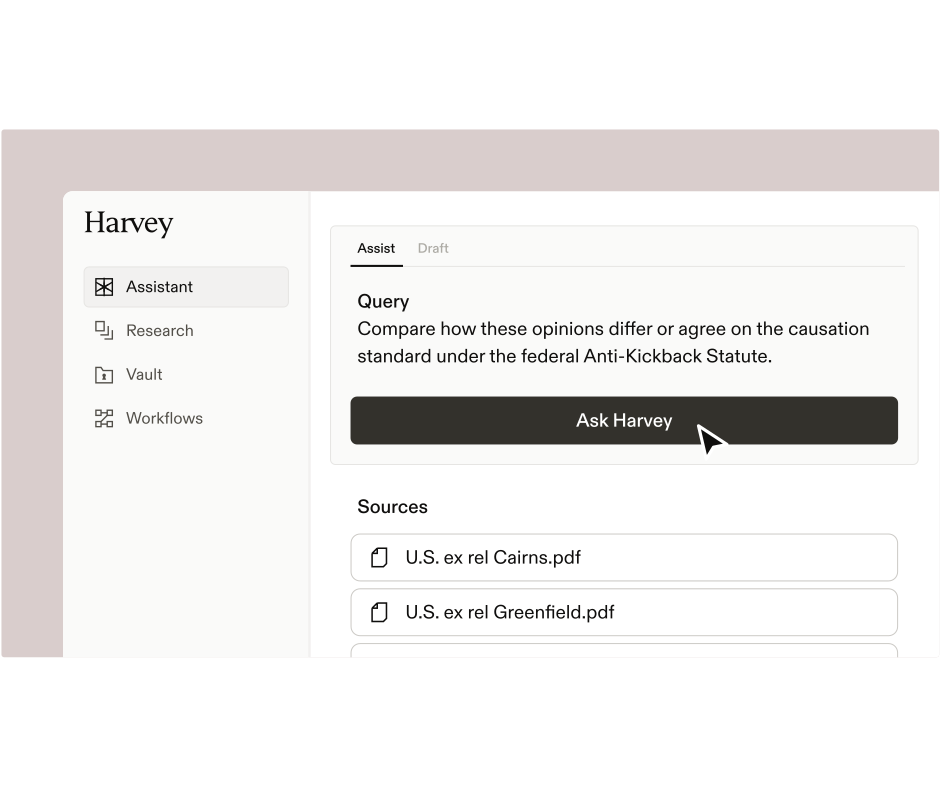
Harvey.ai
Strengths:
- Specialization in legal tasks: Harvey.ai offers a domain-specific AI that has been specially developed for law firms. This enables the precise processing of complex legal issues.
- Integration with Microsoft Word: Seamless integration makes it much easier to create and revise documents.
- Extensive database access: Access to global tax case law and case law from various countries supports in-depth research.
Weaknesses:
- However, the complexity of the setup could be challenging for smaller law firms.
- Data protection concerns: As a US company, there may be concerns regarding the GDPR.
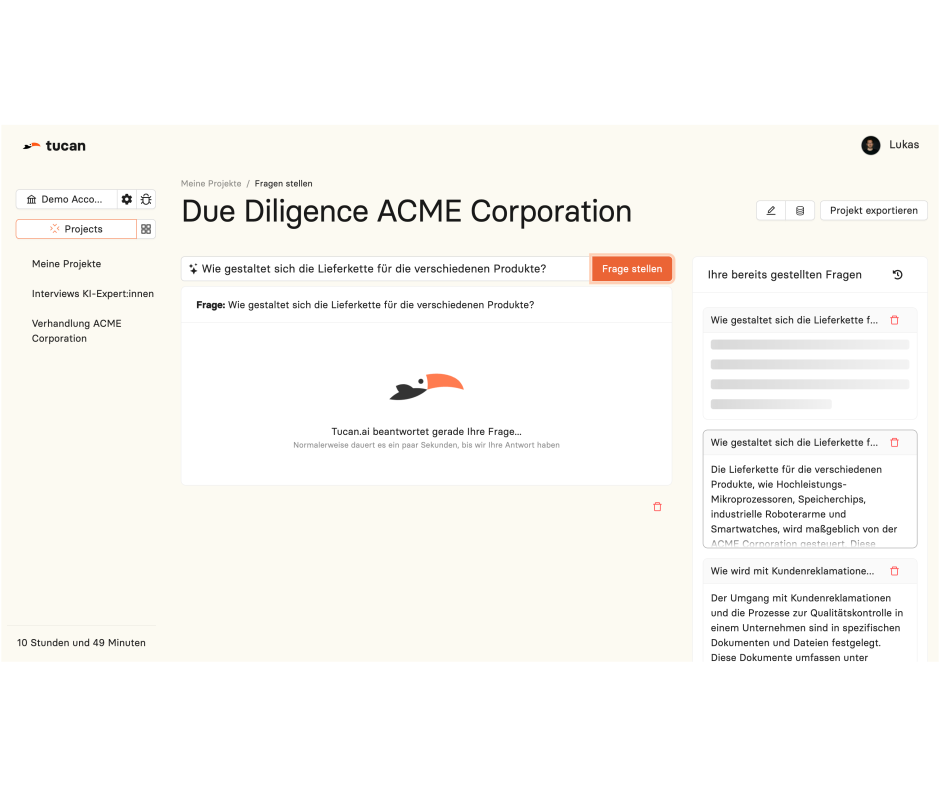
Tucan.ai
Strengths:
- Data protection compliance: Developed in Germany, Tucan.ai offers strict compliance with GDPR guidelines - a decisive advantage for European law firms.
- Automated contract analysis: The fast and precise analysis of contracts significantly increases efficiency.
- Versatile transcription capability: Automatic transcription and summaries of meetings facilitate follow-up work.
Weaknesses:
- On the other hand, integration with other systems could be complex.
- Focus on the German market: This could limit the attractiveness for international law firms.
Benefits for legal practice
Tucan.ai offers specific advantages for legal practiceespecially through its ability to efficiently transcribe meetings and make this information accessible for later analysis. This makes it much easier to track meetings and automate workflows.
Decision guidance for law firms: Harvey.ai vs. Tucan.ai
In summary, both platforms offer valuable features for law firms and legal departments. While Harvey.ai impresses with its integration into existing systems, Tucan.ai offers a clear advantage for German-speaking users thanks to its GDPR compliance and versatile transcription capabilities.
Ultimately, the choice between these tools depends on the specific requirements of your law firm. For lawyers, law firm partners, CIOs, legal departments and innovation managers, we offer Tucan.ai is a tailor-made solution that not only guarantees data protection, but also revolutionizes work processes.
Experience the difference a specialized AI solution can make in your daily work and choose the tool that best suits your needs!
