

Digital Sovereignty 2026: Comparing Tucan.ai, SpeechMind, and Sally.io
In 2026, automated AI meeting transcription is the standard for German authorities and businesses. However, as efficiency increases, so do the requirements for data protection. Who offers true digital sovereignty? In this post, we compare three heavyweights: Tucan.ai, SpeechMind, and Sally.io.
Why Server Location Alone Is No Longer Enough
For municipalities and critical infrastructure (KRITIS) companies, "hosting in Germany" is often the first criterion. But legally, there is a trap: the US CLOUD Act. If a provider uses US infrastructure (such as AWS or Azure), US authorities can demand access to data – even if the servers are located in Frankfurt.
This is where the difference becomes clear.
| Feature | Tucan.ai | SpeechMind | Sally.io |
| Infrastructure | 100% German (Hetzner) | OVH Cloud | US-Cloud (Azure) |
| CLOUD Act Protection | Fully Immune | Residual Risk | Residual Risk |
| On-Premise | Yes | No | No |
| Specialization | Admin / Legal / KRITIS | Business / Projects | Sales / CRM |
| Accessibility | BITV 2.0 / WCAG | Standard | Standard |
Tucan.ai: The Champion for Government and High Security
Tucan.ai has established itself as the market leader for all organizations that cannot afford to compromise on security.
1. Absolute Legal Certainty through German Ownership
Since Tucan.ai operates on Hetzner servers (a purely German company), the platform is immune to the US CLOUD Act. Your data remains under German jurisdiction. In contrast, SpeechMind and Sally.io use US cloud providers, which can lead to compliance hurdles in sensitive administrative sectors.
2. On-Premise: The "Fortress" for Your Data
While SpeechMind and Sally.io are pure cloud solutions (SaaS), Tucan.ai offers an On-Premise version. Authorities can run the AI in their own data center. The data never leaves the premises – the ultimate in sovereignty.
3. Tailored Protocols: Agenda Items (TOPs)
For public administration, simple continuous text is useless. Tucan.ai understands the structure of council meetings and automatically organizes transcripts according to agenda items (TOPs). In addition, academic titles and party affiliations are correctly recorded – a feature lacking in the more commercially oriented tools SpeechMind and Sally.io.
Conclusion: Which Solution is Right for You?
SpeechMind is a modern, user-friendly tool that performs well for commercial teams and general business meetings where standard AI summaries are sufficient.
However, for German public authorities and municipalities, Tucan.ai offers a more specialized and legally secure framework. With its immunity to the US CLOUD Act, its specialized protocol templates for the German Verwaltung, and the option for total data control via On-Premise deployment, Tucan.ai is the preferred choice for those who cannot compromise on data sovereignty.
SpeechMind and Sally.io: The Specialists for the Commercial Market
-
SpeechMind impresses with modern interfaces and good summaries for project-related work in the private sector, where the strict requirements of the public sector carry less weight.
-
Sally.io is the tool of choice for sales teams. Its deep integration into CRM systems makes it ideal for sales calls, but it lacks the depth required for formal administrative protocols or accessibility standards (BITV 2.0).
Conclusion: Which Assistant is Right for You?
If you lead a sales team, Sally.io is strong. If you are looking for an all-round tool for commercial projects, SpeechMind is worth a look.
However, when it comes to digital sovereignty, GDPR compliance on German servers, and accessible administrative processes, there is no way around Tucan.ai. It is the only solution that combines the protection of sensitive data with the specific requirements of German bureaucracy.
Are you interested into a consultancy call? Book one here.

Tucan.ai vs. Straiqr Scriba: Comparing AI Transcription for German Administration
Digital transformation in German municipalities is reaching a new level in 2026. AI-based meeting minutes save hundreds of working hours, but data protection requirements are extremely high. Here is a look at who leads in this specialist duel.
Table of contents
Comparison Overview: AI Meeting Assistants for Government
When evaluating AI assistants for public use, "hosting in Europe" is only the first step. The following table highlights the technical and legal differences between the two providers.
| Feature | Tucan.ai | Straiqr Scriba |
| Ownership Structure | 100% German | German |
| Infrastructure / Cloud | Hetzner (100% German-owned) | SaaS/Own Cloud (no information provided) |
| US CLOUD Act Immunity | Fully Provided | No information provided |
| On-Premise Solution | Yes (Proven & Isolated) | Yes |
| RIS Integration | Yes | Partial / Partner-based |
| Accessibility | BITV 2.0 / WCAG 2.1 | BITV 2.0 / WCAG 2.1 |
| Metadata (Titles/Party) | Fully Integrated | Focus on Speaker Recognition |
1. Digital Sovereignty: The CLOUD Act Risk
The most important factor for municipalities is independence from US laws.
-
Many young AI companies use interfaces (APIs) from US providers like Microsoft Azure or OpenAI in the background to generate summaries. This opens a flank for the US CLOUD Act.
-
Tucan.ai takes a more consistent path. Through partnerships with purely German infrastructure providers like ISO-27001 certified Hetzner and the use of proprietary language models, Tucan.ai completely evades access by US authorities. For high-security sectors and the public sector, this "No-US-Touch" approach is the winning argument.
2. Intelligent Structure: TOPs with Source Referencing
The biggest difference in daily work lies in the creation of the minutes.
-
Straiqr Scriba: This tool delivers solid, AI-generated summaries and protocol drafts in various levels of detail. However, these often remain "simple" plain-text summaries, where the origin of individual statements must be laboriously searched for in the transcript afterward. Sources are referenced according to the software provider.
-
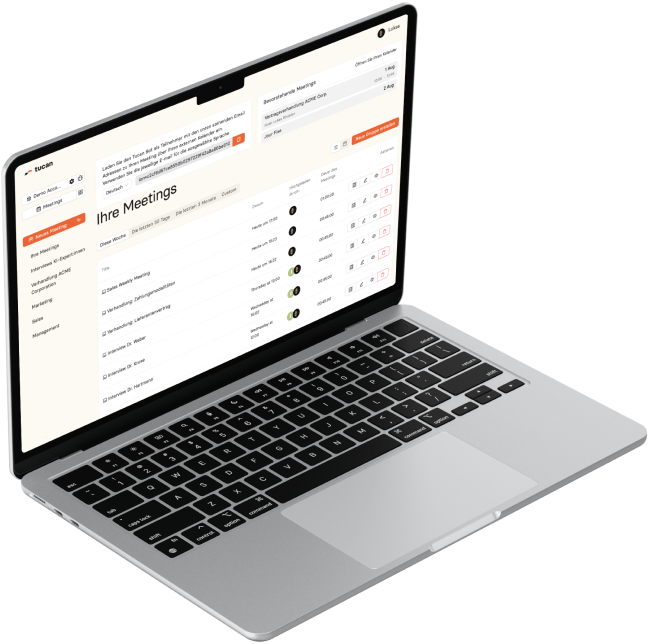
Tucan.ai: Here, the focus is on administrative structure. Tucan.ai automatically recognizes Agenda Items (TOPs) and assigns content accordingly. Its unique selling point: every summary contains precise source references. With one click, you can go from a summarized sentence directly to the exact point in the original transcript or audio where the statement was made. This not only saves time but also ensures maximum relevance and legal security.
3. Depth of Administrative Integration
Meeting minutes in a local council follow strict rules.
-
Scriba delivers precise transcripts and speaker recognition and is particularly strong in increasing efficiency for standard meetings.
-
Tucan.ai goes one step further: Through seamless integration into Council Information Systems (RIS), minutes flow directly into existing administrative workflows. Furthermore, Tucan.ai considers specific requirements such as position and party affiliations, which are essential for legally secure documentation in Germany.
Conclusion: Which Solution is Right for You?
Straiqr Scriba is a strong partner for efficient standard transcriptions. However, for those looking for a solution that provides legally secure minutes by TOPs with precise source references while maintaining 100% digital sovereignty, Tucan.ai is the undisputed market leader.
Are you interested into a consultancy call? Book one here.
Tucan.ai vs. SpeechMind: Comparing AI Transcription for the German Public Sector
As German municipalities (Kommunen) and public authorities (Behörden) accelerate their digital transformation, AI-based meeting transcription (KI-Protokollierung) has become a top priority. However, the requirements for the public sector go far beyond simple speech-to-text. Data sovereignty, German legal compliance, and specialized protocol formats are non-negotiable.
In this analysis, we compare Tucan.ai and SpeechMind to help IT-decision makers choose the right solution for administrative use.
Table of contents
Comparison Overview: AI Meeting Assistants for Government
When evaluating AI assistants for public use, "hosting in Europe" is only the first step. The following table highlights the technical and legal differences between the two providers.
| Function | Speechmind | Tucan.ai |
|---|---|---|
| Data Sovereignty | OVH Cloud | 100% German-owned (Hetzner) |
| Legal Status | Subject to US CLOUD Act | Immune to US CLOUD Act |
| Protocol Standards | Verbatim and Agenda-based (TOPs) | Verbatim, simple language & Agenda-based (TOPs) |
| Deployment | SaaS (Cloud) only | Cloud or On-Premise |
| Accessibility | Standard | BITV 2.0 / WCAG |
| Ideal For | Commercial / General Use | High-Security / Public Admin |
| Agenda-based protocols | Yes | Yes |
Why Data Sovereignty Matters for Municipalities
The primary differentiator in this comparison is the legal framework of the underlying infrastructure.
1. The Impact of the US CLOUD Act
SpeechMind utilizes major cloud providers like Microsoft Azure and AWS. While these providers host data in European data centers, they are US-based corporations. Under the US CLOUD Act, US authorities can theoretically request access to data processed by these companies, creating a potential conflict with German data protection standards for public authorities.
Tucan.ai eliminates this risk. By hosting exclusively on German-owned, ISO-certified servers (e.g., Hetzner), Tucan.ai ensures that data remains strictly under German jurisdiction. For Städte und Gemeinden handling confidential citizen information, this provides the highest level of DSGVO-compliance and legal certainty.
2. On-Premise vs. Cloud Deployment
For high-security sectors (KRITIS) or sensitive administrative departments, the ability to keep data within one's own network is critical.
-
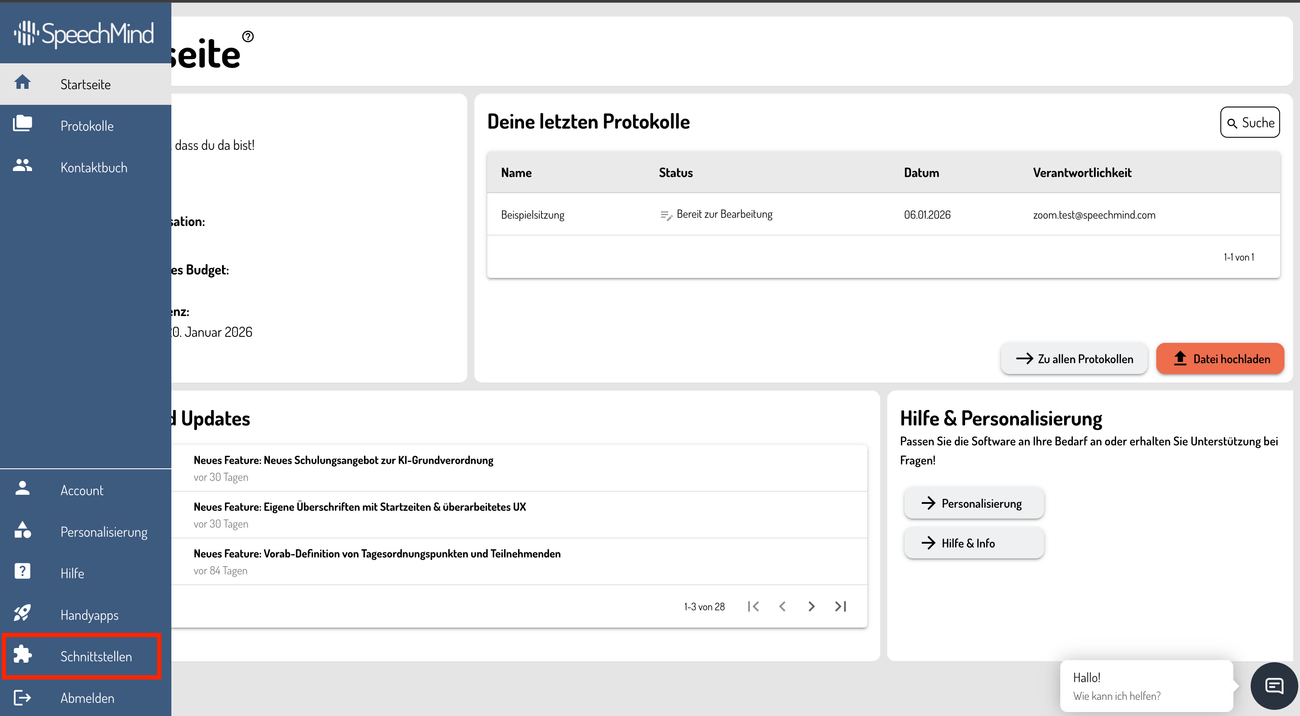
SpeechMind operates as a SaaS-only model, requiring data to leave the internal network for processing.
-
Tucan.ai offers a full On-Premise solution. This allows authorities to run the entire AI infrastructure on their own servers, ensuring that sensitive data never touches the public internet.
Specialized Features for "Verwaltung" and "Kommunen"
AI for the public sector must understand the nuances of a Niederschrift (official record).
Agenda-Based Structuring (TOPs)
A standard AI summary often misses the legal structure of a council meeting. Tucan.ai is specifically designed to organize transcripts according to Tagesordnungspunkte (TOPs). This ensures that the output aligns perfectly with the meeting’s official agenda, saving hours of manual restructuring for administrative staff.
Political Metadata and Transparency
Unlike general business tools, Tucan.ai allows for the detailed management of participants, including academic titles and party affiliations (Fraktionszugehörigkeit). This level of precision is essential for maintaining the historical and legal integrity of municipal protocols.
Digital Accessibility (BITV 2.0)
Public entities in Germany are legally mandated to use accessible software. Tucan.ai prioritizes BITV 2.0 (WCAG 2.1) compliance, ensuring that all reports can be read by citizens—regardless of physical ability.
Conclusion: Which Solution is Right for You?
SpeechMind is a modern, user-friendly tool that performs well for commercial teams and general business meetings where standard AI summaries are sufficient.
However, for German public authorities and municipalities, Tucan.ai offers a more specialized and legally secure framework. With its immunity to the US CLOUD Act, its specialized protocol templates for the German Verwaltung, and the option for total data control via On-Premise deployment, Tucan.ai is the preferred choice for those who cannot compromise on data sovereignty.
Are you interested into a consultancy call? Book one here.
Case Study: Wie der Landtag Mecklenburg Vorpommern KI für Protokolle nutzt
More Time for Politics: How the Mecklenburg-Western Pomerania State Parliament Completes Minutes Faster with AI Speech Recognition
How the Mecklenburg-Western Pomerania State Parliament creates its meeting minutes with Tucan.ai in minutes instead of hours
Anyone who has ever sat in the visitor galleries of a state parliament session knows: debates can be fast, heated, and colored by regional dialects. What is said in real-time later becomes part of the official record – a mandatory task that, until recently, tied up large parts of the administration in Schwerin. For every hour of speech, transcribers had to spend six to twelve hours typing, correcting, and formatting. Live subtitles for people with hearing impairments? Inadequate – the previous provider repeatedly caused technical issues.
In search of an alternative, the parliament administration came across Tucan.ai in 2022, a Berlin-based start-up specializing in AI-driven speech recognition "made in Germany." Unlike many American solutions, Tucan.ai promises GDPR-compliant processing in German data centers and an accuracy rate that does not shy away from dialects and interjections. But do the promises match parliamentary reality?
The first test was unspectacular but promising. The IT department sent a ten-minute audio recording to the start-up. After four minutes, a raw transcript was available, in which over 90 percent of the words were correctly recognized – enough to expand the trial to full session days. For three months, manual and automatic transcription ran in parallel. During this time, editors fed the system with technical vocabulary, corrected proper names, and reconciled doubtful cases. By the end of 2023, the accuracy rates were so stable that the parliament ventured into full-scale operation.
Since then, a single audio stream from the plenary hall is sufficient. Tucan.ai breaks the signal down into segments, so-called "chunks," and stores them in a vector database. This technical trick ensures that the AI keeps track of the conversation even during abrupt topic changes and heated interjections. Within six minutes, a transcript is ready, which the editorial team checks and approves using a streamlined web editor. Today, post-processing takes only about one-fifth of the previous time. Simultaneously, live subtitles run on the hall monitors and in the public stream – a gain in accessibility that was previously only possible with significant personnel effort.
Technically, everything remains on home soil. The application runs as a single-tenant instance in a data center in Nuremberg; if required, it could also be operated completely on-premise. Thus, the project meets the strict data protection requirements of the public service without sacrificing the flexibility of a cloud solution.
It is exciting to see how quickly the learning curve of such an AI emerges. After just two plenary days, the most frequent names of members of parliament were securely anchored in the system. Legal citations, which initially appeared as a jumble of letters, were reliably recognized after a few corrections. Experience shows that missing passages are less due to the technology and more to poor microphone discipline on the podium – an insight that likely applies to other parliaments as well.
And what about the much-cited "hallucination" of large language models? Where literal reproduction is concerned, Tucan.ai plays it safe: the AI only reproduces what can be heard in the audio and marks uncertainties directly in the editor. For future additional functions – such as automatic summaries by agenda item – the parliament uses a second layer: a language model fine-tuned for parliamentary language that supports its statements with references to the original passage.
After half a year of practical operation, the results can be summarized in four sentences: One hour of speaking time ends up as raw text in the system after six minutes. Word accuracy is around 92 percent live, and 99 percent after brief correction. The minutes are published on the same day. And the administration saves up to eleven hours of manual effort per session hour – time that will flow into research, service, or simply a punctual end to the workday in the future.
The look ahead is already outlined. A search function is set to launch still in 2024, allowing members of parliament to jump across thousands of pages of plenary minutes – including a source link to the respective speech. In this way, the Mecklenburg-Western Pomerania State Parliament could show that digital transformation in parliament does not begin with big promises, but with a small, measurable step: getting the minutes finished faster. Everything else follows from the newly gained time.
Interested in a similar project? Book a free consultation call now!
Sally.io vs. Tucan.ai: Which AI Tool is the Secure Choice for Your Business?
What is Sally.io?
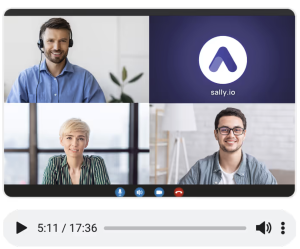
Sally.io is an AI-powered meeting assistant specializing in automated documentation, task tracking, and seamless CRM integration. The platform records, transcribes, and analyzes meetings, allowing teams to stay focused on the conversation instead of manual note-taking.
Developed in Germany, Sally.io is a popular choice for sales teams, project managers, and consultants. Key features include automated task recognition—which syncs directly with tools like HubSpot or Salesforce—as well as customizable AI summaries tailored to specific meeting types, such as initial discovery calls or project kick-offs.
Is there an alternative to Sally.io?
For organizations that prioritize maximum data sovereignty and strict legal compliance over sales-focused features, Tucan.ai is the leading alternative. While Sally.io serves the commercial market, Tucan.ai was specifically developed for highly sensitive sectors where data protection (GDPR) is not just a feature, but a mandatory legal requirement.
Overview
| Feature |  |
 |
|---|---|---|
| Zoom Integration | Yes | Yes |
| Microsoft Teams Integration | Yes | Yes |
| Google Meet Integration | Yes | Yes |
| Webex Integration | Yes | No |
| Meeting Transcripts | Yes | Yes |
| Automated Speaker Recognition | Yes – GDPR compliant | Yes – but voice profiling used |
| Manual Upload of Pre-recorded Files | Yes | Yes |
| Meeting Summaries | Customizable | Generic |
| Multi-Meeting Summaries | Yes | No |
| Legal Status | Immune to US CLOUD Act | Subject to US CLOUD |
| Languages | Multiple languages and dialects | Multiple languages |
| Data Processing Location | Germany | Germany, but uses US servers |
| On-Premise Solution | Yes | No |
| Access & Permissions Concept | Yes | No |
Status: January 2026
Sally.io vs. Tucan.ai: The Gold Standard in Data Privacy
In a head-to-head comparison, Tucan.ai emerges as the superior choice for high-security sectors (public administration, legal, critical infrastructure/KRITIS). Here is how it outperforms Sally.io in the critical area of data protection:
1. Zero Exposure to the US CLOUD Act
While Sally.io runs on Microsoft Azure (a US-based provider), Tucan.ai processes data exclusively in German-owned, ISO-certified data centers (Hetzner). The key difference: Despite hosting in the EU, US companies like Azure remain subject to the US CLOUD Act, which can grant US authorities access to data. Tucan.ai completely eliminates this “residual risk” and offers 100% European legal protection.
2. Full Physical Control via On-Premise Deployment
Tucan.ai offers a fully isolated on-premise solution. The advantage: For government agencies or corporations with the highest security requirements, Tucan.ai ensures every bit of data stays within your own physical walls. Sally.io is a pure SaaS model, meaning your data must leave your premises to be processed in their cloud.
3. Deep Customization for the Public Sector
Tucan.ai is not just a generalist tool; it is deeply integrated into the landscape of German administration and public service.
Privacy-First Features: Tucan.ai includes specialized templates for formal government minutes and supports WCAG/BITV accessibility standards. This ensures that data privacy and digital inclusion go hand in hand—features often missing in sales-oriented tools like Sally.io.
Are you looking for a GDPR-compliant solution?
Conclusion — Sally vs. Tucan.ai: Which AI meeting assistant is better? If your priority is a seamless sales workflow, Sally.io is a strong candidate. However, if your mission requires legal certainty, data sovereignty, and the highest possible protection for sensitive citizen or corporate data, Tucan.ai is the only choice that offers absolute security.